
Theory of Change
Our Core Belief
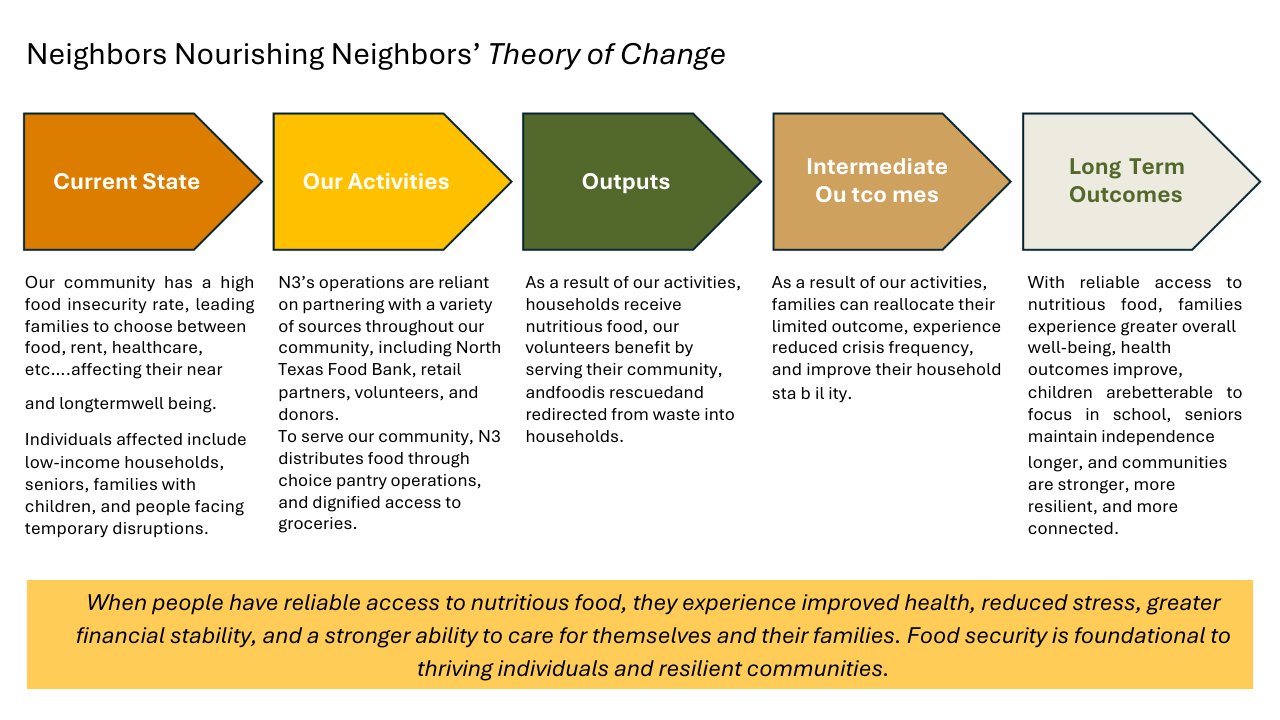
When people have reliable access to nutritious food, they experience improved health, reduced stress, greater financial stability, and a stronger ability to care for themselves and their families. Food security is foundational to thriving individuals and resilient communities.
The Problem We Address
Many individuals and families in our service area face:
Food insecurity due to rising living costs, housing instability, and underemployment
Limited access to fresh, nutritious food
Transportation and mobility barriers
Short-term crises (weather events, job loss, illness) that disrupt household stability
Chronic stress caused by uncertainty about meeting basic needs
Without consistent food access, families must choose between food, rent, utilities, and healthcare — creating a cycle of instability that affects long-term well-being.
Our Target Population
Neighbors Nourishing Neighbors serves individuals and families experiencing food insecurity across our community, including:
Low-income households
Seniors on fixed incomes
Families with children
Individuals experiencing job loss or reduced work hours
People facing temporary emergencies or life disruptions
Our Inputs (What Makes the Work Possible)
Food supply from:
North Texas Food Bank partnership
Retail recovery partners (grocery, restaurant, and food industry donors)
Community food drives
Purchased through monetary donations
Volunteers
Donors and sponsors
Staff and leadership
Community partnerships
Facilities and distribution sites
Our Activities (What We Do)
Neighbors Nourishing Neighbors:
Distributes nutritious food through choice pantry operations
Provides consistent, dignified access to groceries
Maintains emergency responsiveness during weather or crisis situations
Engages volunteers in food sorting, stocking, and distribution
Builds partnerships with food suppliers and community organizations
Communicates resources and updates to the community
Outputs (Direct Results of Our Work)
As a result of our activities:
Households receive groceries
Individuals access nutritious food regularly
Food is distributed into the community
Volunteers gain a sense of accomplishment by making a difference in their community
Food is rescued and redirected from waste into households
Short-Term Outcomes (Immediate Changes)
Recipients experience:
Reduced hunger
Immediate relief from food-related financial stress
Increased access to nutritious foods
Greater sense of dignity and support
Intermediate Outcomes (Stability Gains)
Over time, families are better able to:
Reallocate limited income to housing, utilities, healthcare, and transportation
Maintain more consistent household budgets
Experience reduced crisis frequency
Improve overall household stability
Long-Term Impact (The Change We Aim to See)
Because of reliable food access:
Families experience greater overall well-being
Health outcomes improve due to better nutrition
Children are better able to focus in school
Seniors maintain independence longer
Communities are stronger, more resilient, and more connected
If–Then Logic (Simple Summary)
If neighbors facing food insecurity have consistent access to nutritious food in a dignified, community-centered environment,
then immediate hunger and stress are reduced,
which allows families to stabilize financially and focus on other essential needs,
leading to improved health, resilience, and long-term community well-being.
What Makes N3’s Approach Unique
Community-rooted and neighbor-focused
Dignity-centered service model
Strong volunteer engagement
Diverse food sourcing model for sustainability
Responsive to community needs and emergency conditions